
Art at Didi Barrett's Office
Cara B. Hochhalter | On view June 2026 - January 2027
12 Raymond Avenue, Suite 105, Poughkeepsie, NY
Visitors are welcome to view the artwork by appointment. Please call 845-454-1703 to confirm office hours and schedule a visit.
Arts Mid-Hudson, in collaboration with Assemblymember Didi Barrett, presents a rotating exhibition at her Poughkeepsie office featuring the work of Arts Mid-Hudson member artists residing within her district. This exhibition offers a unique platform for individual artists to present their work in a public and civic setting, fostering meaningful engagement with the arts while celebrating the cultural vibrancy of the Hudson Valley.
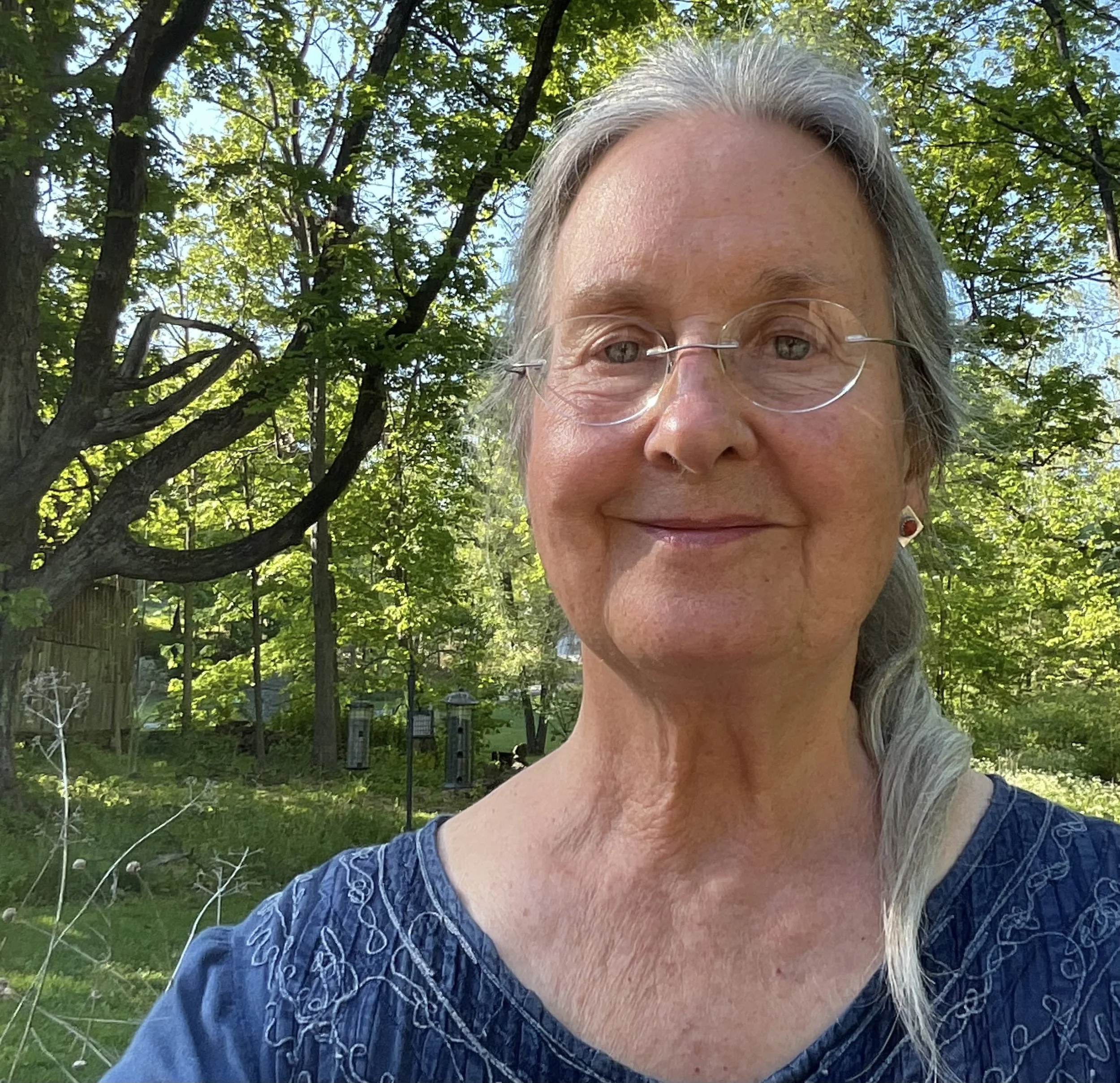
Cara B. Hochhalter
-
Cara B. Hochhalter grew up in Michigan and graduated from the University of Michigan with a degree in Art History and Education. Her careers have involved education, art, theology and ministry. She attended United Theological Seminary of the Twin Cities to study art and theology, graduating in 2008 with a Master of Divinity degree. She served as pastor of a United Church of Christ in Massachusetts for ten years and published a book of 40 block prints that interpret gospel stories.
Cara has exhibited watercolors and block prints of wildflowers and other nature images in Northern Michigan, Washington State, Minnesota, Massachusetts, and now, New York. While living in Seattle from 1991-1993, she created a print of sixteen endangered wildflowers of Washington State.
Since retiring to Hyde Park, New York, she has explored the interconnections between native plants and pollinators. She published a book in 2024 entitled: “Where Do Butterflies Go at Night? and other Pollinator Ponderings.” This book as well as these paintings, are available through Arts Mid-Hudson.
She continues to paint and make block prints and is happy to share through workshops and talks.
-
I am happy to share some of my interpretations of plants and pollinators in the office of Didi Barrett! Some are what I call “loose botanicals,” where a combination of watercolor and pencil work (graphite) in the background adds dimension to the flowers. I love the play of the two mediums.
Other images are watercolor, with pen and ink to add details.
Another way that I like to use watercolor is what I call, “negative glazing.” I apply color to the paper and paint the negative spaces around the shapes to define the flowers, as in the piece entitled, “Flowers of Mount Rainier.”
Lastly, I enjoy the process of block printing. Carving into a block, I love the play of light and dark as the image evolves, knowing that it will print backwards on the rice paper. I add color with watercolor pencils. In the cover image for my book, I collaged the block prints of pollinators onto the painting of Black-eyed Susans.
While flowers, particularly native plants, are beautiful, the interactions with pollinators make their environments even more interesting. Planting native plants in our region will encourage the biodiversity that is so needed.
Thank you!